





How JISAN 4-Core Attachments Boost Demolition & Recycling Output 30%
In the rapidly evolving sectors of construction demolition, scrap metal recycling, and material recovery, operational efficiency is no longer merely a competitive advantage—it is a fundamental requirement for economic survival. The transition from traditional "wrecking" methodologies to precision "urban mining" demands a highly synchronized fleet of hydraulic attachments. This comprehensive technical white paper explores the synergistic application of four core hydraulic tools: the power shear, excavator scrap shear, hydraulic pulverizer, and concrete crusher. By analyzing the engineering mechanics, hydraulic logic, and material science behind JISAN Heavy Industry's OEM-certified equipment, we demonstrate how a synchronized four-phase demolition and recycling workflow can increase overall site output by up to 30%.
Key Takeaways
A synchronized 4-phase attachment matrix transforms chaotic demolition sites into highly profitable "urban mines," boosting overall output by up to 30%.
The demolition shear and power shear provide immense, cold-cutting force for safe structural steel dismantling without the hazards of cutting torches.
JISAN's 2.4-second cycle time scrap shear dramatically increases daily tonnage throughput compared to industry-standard attachments.
The hydraulic concrete pulverizer for excavator applications ensures clean separation of rebar and concrete, maximizing the scrap value of both materials.
OEM-verified carrier compatibility guarantees zero-risk hydraulic matching, protecting your expensive Tier-1 excavators from catastrophic pump damage.
Phase I: Structural Dismantling and Steel Framework Processing
The Mechanics of the Power Shear
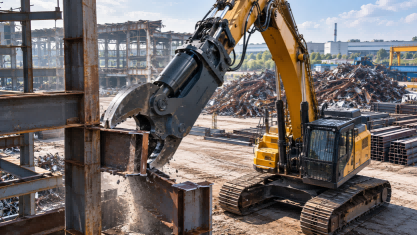
The first phase of any major industrial or commercial demolition project involves the safe and efficient dismantling of primary steel structures, such as factory frameworks, bridges, and high-rise skeletal supports. This requires an attachment capable of immense shearing force, combined with the precision to isolate individual load-bearing members without causing catastrophic, uncontrolled collapses. At the forefront of this phase is the power shear, a heavy-duty hydraulic attachment specifically engineered for the cold cutting of thick steel profiles, including H-beams, I-beams, and heavy-walled pipes.
Unlike cutting torches, which introduce extreme heat, create fire hazards in confined spaces, and require extensive safety permitting, a demolition shear operates at ambient temperatures, drastically improving site safety and operational speed. The core engineering advantage of JISAN’s hydraulic demolition shears lies in their synchronized cutting precision and specialized jaw geometry. The blades are designed with a staggered overlap mechanism that applies immense localized shear stress to the metal, forcing it to exceed its ultimate tensile strength and fracture cleanly.
Hydraulic Circuit Optimization and Safety Protocols
A critical, often overlooked aspect of heavy shearing is the management of hydraulic shock and reverse loading. When a heavy-duty excavator shear bites into a complex steel truss, the material may shift unexpectedly, placing immense lateral or reverse torque on the jaw cylinders. JISAN engineers have integrated advanced reverse cylinder protection systems and hydraulic lock valves into their designs. These systems instantly isolate the hydraulic fluid within the cylinder if a hose rupture occurs or if an abnormal reverse load is detected, preventing the heavy steel structure from dropping uncontrollably and protecting the operator and surrounding infrastructure.
Phase II: High-Volume Scrap Processing and Metal Recovery
The Superiority of the Eagle Beak Geometry
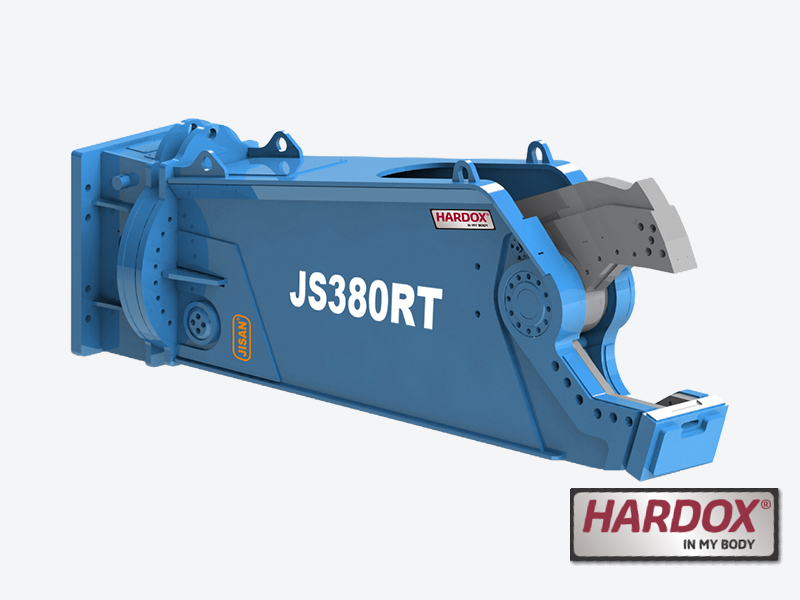
Once the primary structure has been dismantled, the resulting tangled mass of steel must be processed into dense, furnace-ready bundles or sheared into specific lengths for transport to steel mills. While traditional flat-jaw alligator shears are adequate for processing pre-sorted, uniform materials, they fail dramatically in the chaotic environment of a real-world scrap yard. The excavator scrap shear (often referred to in the industry as eagle shears or an eagle beak shear) revolutionizes this process through its specialized piercing tip and curved jaw geometry.
The "Eagle Beak" design allows the operator to pierce deep into a tangled pile of scrap metal, hook a specific heavy beam or pipe, and pull it out into a stable cutting position before the main jaw closes. As a highly efficient scrap shear, the eagle beak design transforms a multi-step sorting and cutting process into a single, fluid motion, drastically reducing the cost per ton of processed metal.
The Economics of the 2.4-Second Cycle Time
In the scrap metal industry, time is literal currency. JISAN’s flagship mobile scrap shear is engineered to achieve a blistering 2.4-second cycle time (open to close). When compared to industry-standard attachments that operate on a 4.0 to 5.0-second cycle, the JISAN advantage becomes mathematically undeniable. Over a standard 10-hour shift, the JISAN hydraulic scrap shear processes an additional 140 tons of scrap per day, per machine. This exponential increase in throughput easily accounts for the promised 30% boost in overall site output, rapidly accelerating the Return on Investment (ROI) for the end-user. Furthermore, the integration of premium Hardox® wear plates ensures the scrap metal shear maintains its structural integrity under extreme abrasion.
Phase III: Secondary Demolition and Concrete/Rebar Separation
Kinetic Energy Transfer and Tooth Geometry
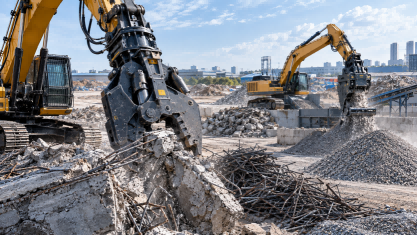
Following the removal of structural steel, the demolition site is typically left with massive reinforced concrete (RC) foundations, shear walls, and floor slabs. The objective of Phase III is not merely to break the concrete, but to cleanly separate the embedded steel rebar from the concrete matrix. The hydraulic pulverizer is the specialized tool designed for this exact purpose. Unlike a hydraulic breaker which shatters concrete through high-frequency impacts, a demolition pulverizer uses immense, sustained static force combined with optimized kinetic energy transfer to fracture the concrete along its natural fault lines, pulling the rebar out intact.
The engineering secret lies in the optimized tooth geometry and the application of the kinetic energy formula: E = 1/2 mv². By maximizing the mass of the moving jaw and optimizing the velocity of the hydraulic cylinder stroke, JISAN engineers ensure that the concrete pulverizer teeth deliver maximum fracturing energy exactly at the point of contact, effectively "peeling" the concrete away from the steel reinforcement.
The Necessity of 360-Degree Rotation
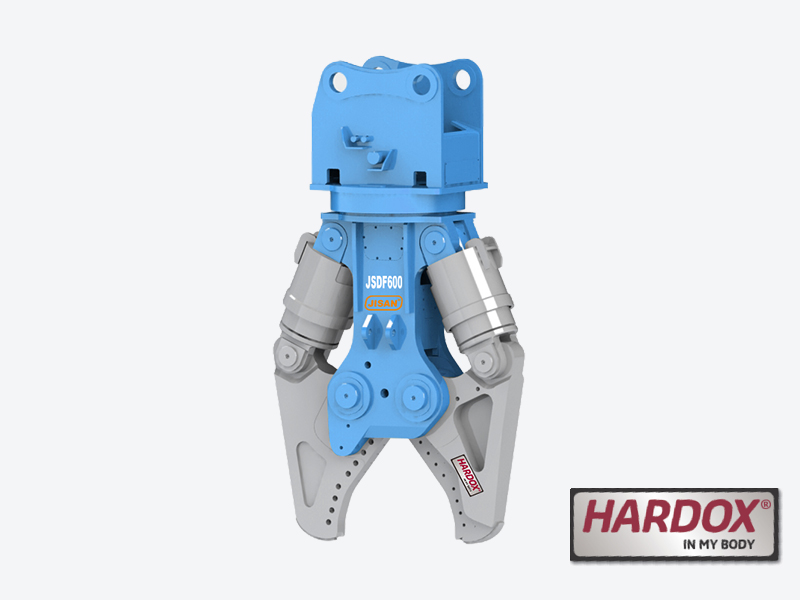
In real-world demolition scenarios, concrete structures rarely fall perfectly flat or present themselves at an ideal working angle. The integration of a rotating hydraulic pulverizer solves this bottleneck. Equipped with a heavy-duty, 360-degree continuous rotation hydraulic motor and a robust internal gear ring, the hydraulic concrete pulverizer for excavator applications allows the operator to manipulate the jaws in three-dimensional space. Whether biting into a vertical retaining wall or twisting a piece of rebar to snap it cleanly, the attachment maintains optimal cutting angles at all times, keeping the material flow constant.
| Demolition Phase | Primary Attachment | Core Function & Advantage |
|---|---|---|
| Phase I: Structural Dismantling | Power Shear / Demolition Shear | Cold-cutting of H-beams and heavy frameworks; eliminates fire hazards associated with torches. |
| Phase II: Scrap Processing | Excavator Scrap Shear (Eagle Beak) | Piercing and grabbing tangled piles; 2.4s cycle time maximizes daily furnace-ready tonnage. |
| Phase III: Concrete Separation | Hydraulic Pulverizer | Cleanly separates rebar from concrete matrix; 360-degree rotation for complex structural angles. |
| Phase IV: Aggregate Recycling | Concrete Crusher | Reduces clean concrete rubble into marketable Recycled Concrete Aggregate (RCA) on-site. |
Phase IV: On-Site Aggregate Production and Concrete Recycling
Synchronized Cylinders and Bite Force Dynamics
The final phase of the material recovery process involves taking the clean, rebar-free chunks of concrete produced by the pulverizer and reducing them to specific, marketable aggregate sizes. This is where the concrete crusher takes over, transforming demolition waste into valuable Recycled Concrete Aggregate (RCA) used for road sub-bases, drainage layers, and even new concrete mixes. JISAN’s hydraulic concrete crusher utilizes a synchronized cylinder system that ensures the moving jaw applies perfectly even pressure across the entire width of the concrete block, preventing the torsional stress that destroys inferior attachments.
The Economics of Mobile vs. Stationary Crushing
Traditionally, demolished concrete was loaded onto heavy dump trucks, transported to a remote, stationary quarry, processed, and then the aggregate was transported back to the city. This logistical nightmare incurs massive fuel costs and carbon emissions. The advent of the mobile concrete crusher (the excavator-mounted attachment) has revolutionized this supply chain. By processing the concrete directly on the demolition site, contractors eliminate the cost of transporting waste material to landfills. A compact concrete crusher mounted on a mid-sized excavator can process hundreds of tons of material per day, turning a significant disposal liability into a highly profitable, on-site revenue stream.
The Engineering Foundation: OEM Compatibility and Carrier Integration
The most technologically advanced hydraulic shear for excavator or concrete pulverizer is entirely useless—and potentially destructive—if it is not perfectly matched to the hydraulic system of the host carrier. Every excavator model has a highly specific auxiliary hydraulic flow rate and maximum pressure threshold. If an excavator shear attachment requires more flow than the carrier’s hydraulic pump can provide, the excavator’s engine will "lug down," leading to excessive fuel consumption and severe overheating of the hydraulic oil.
JISAN’s team of 40 expert engineers utilizes advanced hydraulic simulation software to pre-calibrate every attachment to match the exact parameters of Tier-1 carriers like Sany and XCMG. This "zero-risk matching" ensures that the attachment operates at peak efficiency without compromising the health of the host machine, keeping your OEM warranties fully intact.
The promise of a 30% increase in operational output is not achieved through a single magic bullet, but through the meticulous integration of specialized engineering across the entire demolition and recycling workflow. When combined with the unmatched durability of Hardox® wear steel, the lightning-fast 2.4-second cycle times, and the absolute peace of mind that comes from OEM-verified carrier compatibility, JISAN Heavy Industry provides a comprehensive, high-ROI system that turns the chaotic process of demolition into a precision-engineered science.
FAQ
How does the 2.4-second cycle time of an excavator scrap shear impact ROI?
In a high-volume scrap yard, cycle time dictates daily tonnage. A 2.4-second cycle time allows the excavator to process nearly double the amount of cuts per shift compared to standard 4.5-second attachments. This exponential increase in throughput directly accelerates the Return on Investment (ROI), often allowing the attachment to pay for itself within the first few months of heavy operation.
Why is Hardox® steel critical for scrap metal shears and demolition shears?
Processing heavy structural steel and abrasive concrete generates immense friction and impact forces. Standard carbon steel will rapidly wear, deform, or crack under these conditions. Hardox® wear plate provides a unique combination of extreme surface hardness and internal toughness, ensuring the shear's side plates and guide mechanisms resist abrasion and structural fatigue, drastically lowering the Total Cost of Ownership (TCO).
Can a hydraulic concrete pulverizer for excavator handle heavily reinforced concrete?
Yes. Unlike hydraulic breakers that merely shatter concrete into contaminated dust, a hydraulic concrete pulverizer utilizes specialized interlocking teeth and immense static jaw force to "peel" the concrete away from the steel rebar. This ensures both the concrete and the steel are recovered cleanly, maximizing their respective recycling values.
What is the advantage of a mobile concrete crusher over stationary machines?
A mobile concrete crusher mounted on an excavator eliminates the logistical nightmare and high costs of transporting demolition waste to remote, stationary recycling quarries. By processing the material directly on-site, contractors can instantly convert waste into valuable Recycled Concrete Aggregate (RCA) for immediate use as road base or backfill, creating a closed-loop, highly profitable operation.
How do I ensure my hydraulic shear for excavator is perfectly matched to my carrier?
Improper hydraulic flow or pressure settings can destroy your excavator's main hydraulic pump. JISAN guarantees "zero-risk matching" by utilizing advanced hydraulic simulation software to pre-calibrate every attachment to the exact auxiliary flow and pressure parameters of Tier-1 carriers like Sany and XCMG. This ensures peak attachment performance while fully protecting your carrier's warranty and mechanical health.
Please Contact Us!


Recent News
1.JISAN Heavy Industry has been awarded Hardox by Swedish Steel Oklund Co., Ltd. for five consecutive years ® Handa Steel Authorization
2026-05-082.New product launch | Deeply cultivate demand, iterate and upgrade! New excavator accessories make a heavyweight debut, unlocking new operational efficiency | JISAN Heavy Industry
2026-05-083.Efficiency breakthrough! Empowering the industry with high-end dismantling equipment, 7-minute rapid dismantling reshapes new standards for scrapped car disposal
2026-05-084.JISAN Heavy Industry Debuts at the 2026 Las Vegas Construction Machinery Exhibition | Shining on the Global Stage with Hard Core Components
2026-05-08


