




Choosing Between Hydraulic and Mechanical Scrap Shears
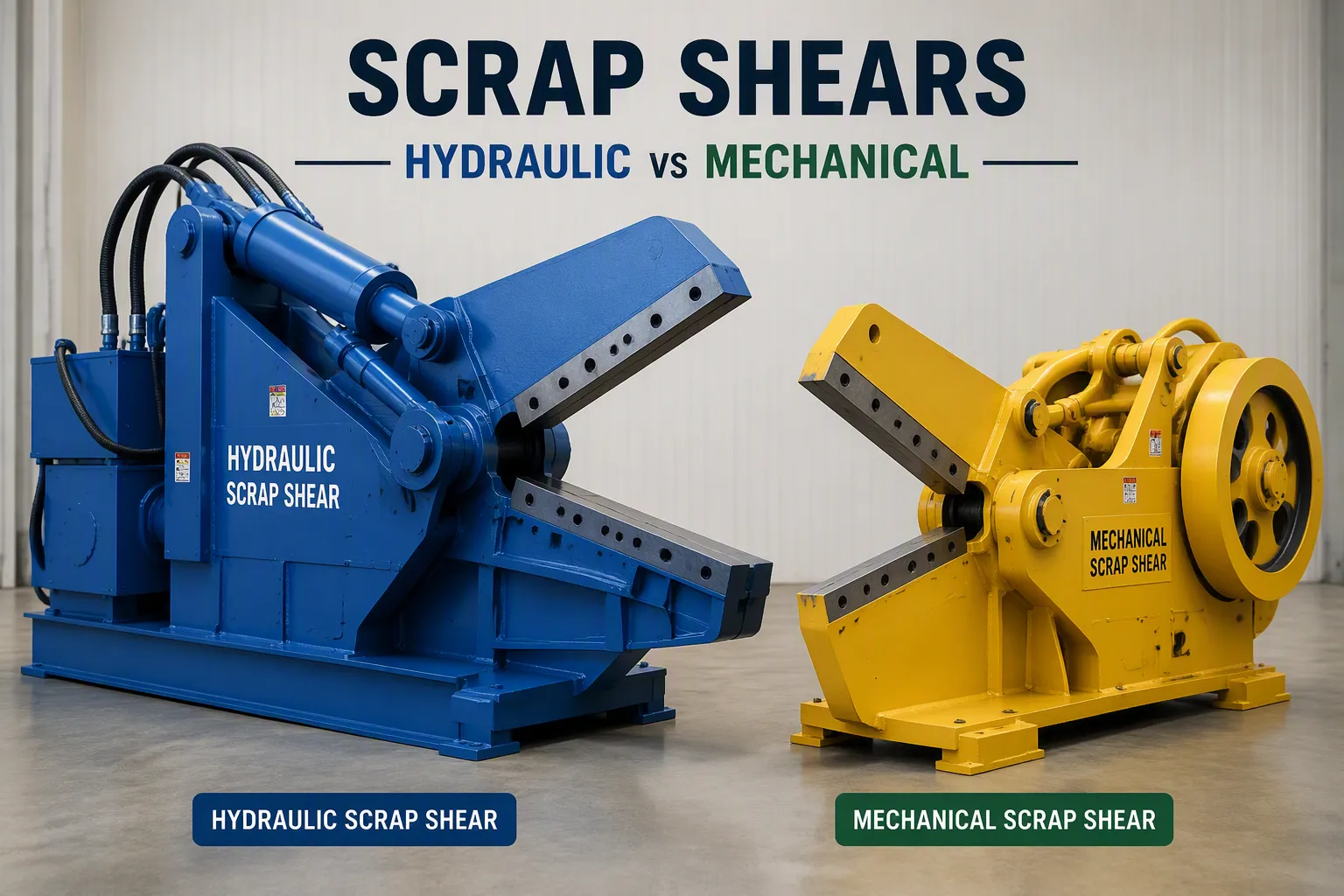
Choosing between a hydraulic scrap shear and a traditional mechanical shear is a critical decision that directly impacts your scrap yard's throughput, operating costs, and workplace safety. While mechanical shears (like traditional alligator shears) have historically played a role in light-duty sorting, the modern scrap recycling industry is overwhelmingly shifting toward hydraulic technology. Why? Because processing today's mixed, heavy-duty scrap—from structural steel to end-of-life vehicles—requires immense, controllable force and on-site mobility that fixed mechanical systems simply cannot provide. In this guide, we break down the real-world differences to help you maximize your ROI.
Key Takeaways
Hydraulic scrap shears deliver immense, controllable force for thick, mixed scrap, while mechanical shears are limited to lighter, uniform materials.
Excavator-mounted hydraulic shears offer unmatched mobility, eliminating the need to transport scrap to a stationary machine.
Mechanical shears require significant upfront infrastructure (foundations, heavy power drops), whereas hydraulic attachments utilize your existing excavator.
Hydraulic systems provide superior safety through cabin operation and overload protection valves, avoiding the "double-stroking" hazards of mechanical clutches.
For modern scrap yards and demolition sites, hydraulic shears offer a faster, safer, and more profitable return on investment.
Scrap Shear Types Overview
Hydraulic Scrap Shear Basics
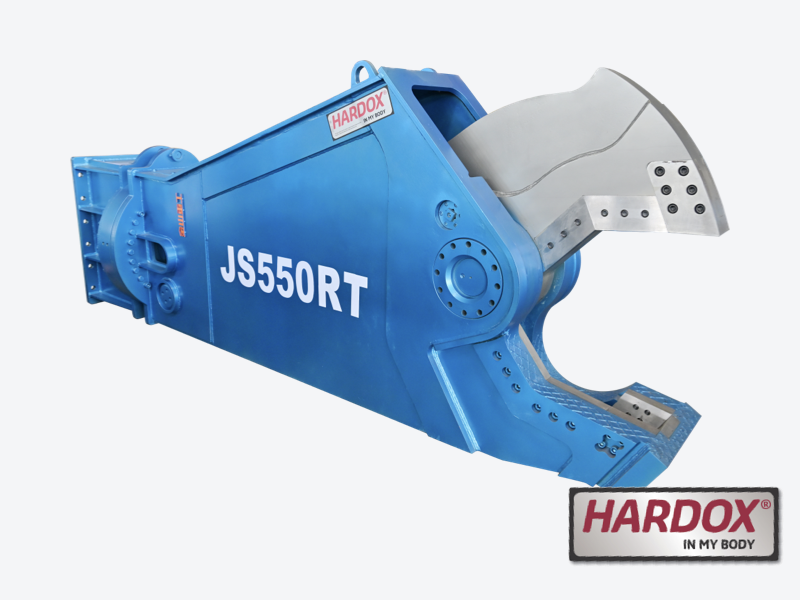
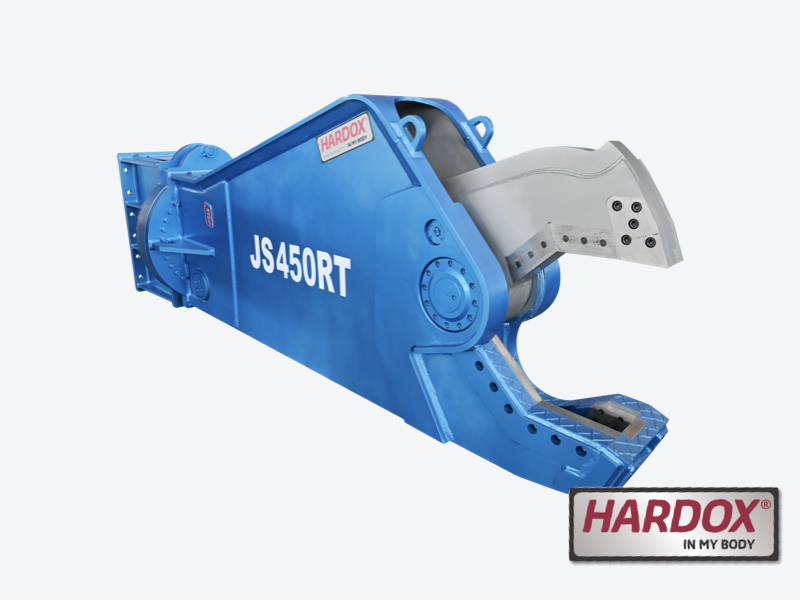
A hydraulic scrap shear uses pressurized fluid to generate high cutting force. In the scrap industry, the most efficient setup is an excavator-mounted hydraulic shear. This mobile shearing machine delivers immense power, making it ideal for heavy-duty applications. The JISAN Hydraulic Eagle Shear exemplifies these qualities, featuring 360-degree continuous rotation and specialized beak designs for piercing and grabbing.
This technology excels at shearing metal in thick sections. It handles mixed scrap, structural beams, and demolition debris with ease. The hydraulic system provides smooth, controllable motion, allowing the operator to precisely position the blades before applying full force. This control reduces shock loads on the carrier excavator and ensures clean, furnace-ready cuts.
Mechanical Shearing Machine Basics
A mechanical shearing machine in the scrap yard typically refers to a stationary alligator shear or an older flywheel-driven guillotine shear. These machines rely on a heavy flywheel and a mechanical clutch to release kinetic energy in a rapid burst.
While they can achieve fast cycle times on very thin, uniform materials (like light rebar or sheet metal), they lack the brute force required for heavy structural steel. Furthermore, because they are bolted to the floor, they require you to bring the scrap to the machine. This necessitates additional material handling equipment, such as cranes or grapple loaders, creating a bottleneck in the processing flow.
Performance: Speed, Power, and Mobility
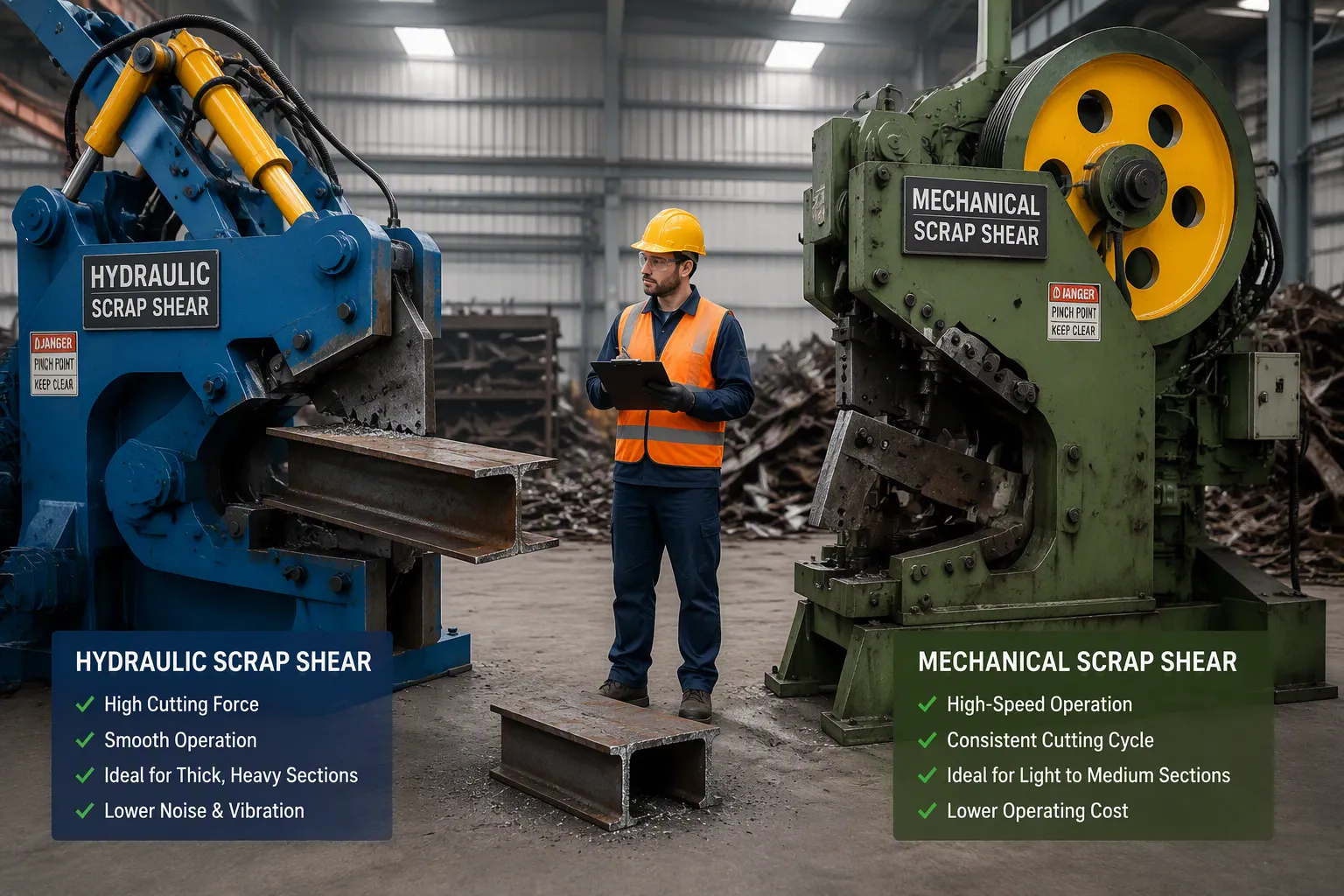
Performance in scrap processing isn't just about how fast the blade closes; it's about overall workflow efficiency. Operators must weigh cutting force against material handling time. A hydraulic scrap shear delivers brute strength and mobility, while a mechanical shearing machine offers rapid repetition only if the material is already perfectly staged.
Hydraulic Scrap Shear Power and Mobility
Cutting force defines the hydraulic scrap shear advantage. The JISAN Hydraulic Eagle Shear produces hundreds of tons of cutting force at the blade tip. That power handles thick structural steel, heavy machinery components, and tangled demolition debris without stalling.
The true game-changer, however, is mobility. With an excavator-mounted hydraulic shear, the machine goes to the scrap pile. Operators can drive directly into a mixed pile of debris, grab a beam, rotate the shear 360 degrees to find the optimal cutting angle, and process it on the spot. This eliminates the costly time spent loading, transporting, and staging materials at a stationary machine. The patented speed valve technology on JISAN models ensures that despite the immense power, cycle times remain highly productive.
Mechanical Shear Limitations in Heavy Scrap
Speed dominates the mechanical shear profile, but only under strict conditions. These machines excel in dedicated, high-volume production lines where uniform, thin materials (like sorted copper wire or light aluminum extrusions) are fed continuously via conveyor.
However, when faced with heavy, unpredictable scrap, mechanical shears struggle. If a piece of steel is too thick or positioned incorrectly, the mechanical flywheel can stall, requiring manual clearing. Furthermore, the lack of mobility means that for large items like engine blocks or long I-beams, the material must be pre-cut or maneuvered precisely into the machine's fixed jaws, drastically reducing actual throughput.
Maintenance, Safety, and Environment
Maintenance Needs: Hydraulic vs. Mechanical
Maintenance profiles differ significantly between the two technologies. The table below summarizes the key operational differences for scrap yard managers.
| Aspect | Hydraulic Scrap Shear | Mechanical Shearing Machine |
|---|---|---|
| System complexity | Hydraulic cylinders, hoses, and valves | Heavy flywheels, mechanical clutches, and brake bands |
| Routine tasks | Greasing pivot pins, checking hydraulic fluid and hoses | Adjusting clutch bands, replacing friction brake pads, lubricating gears |
| Durability | High. JISAN uses Hardox 500/600 steel to resist abrasion. | Moderate. Clutches and brakes wear out rapidly under heavy shock loads. |
The hydraulic scrap shear demands attention to its hydraulic transmission system. Hoses must be inspected for leaks, and pivot points require daily greasing. However, JISAN enhances durability in its hydraulic models by using Hardox 500/600 steel in wear zones and blades, extending service life significantly compared to conventional steel.
Mechanical shears avoid fluid leaks, but their mechanical clutches and brake bands are highly susceptible to wear, especially when processing heavy scrap that causes severe shock loading. Adjusting the clutch tension is a frequent and skilled maintenance task; if neglected, the machine's performance degrades rapidly.
Safety and Environmental Impact
Safety is where hydraulic shears vastly outperform mechanical alternatives in heavy scrap applications. Mechanical shears pose a severe risk of "double-stroking" or "continuous cycling"—where a worn clutch fails to disengage, causing the heavy blade to crash down repeatedly without warning. This is a leading cause of catastrophic injuries in scrap yards. Furthermore, operators often have to stand near the machine to feed it manually or guide a grapple.
In contrast, an excavator-mounted hydraulic shear keeps the operator safely inside the enclosed, ROPS-certified cab, away from flying debris and cutting zones. Hydraulically, the system is protected by relief valves. If the shear bites into uncuttable material, the hydraulic pressure simply spikes and bypasses through the valve, preventing structural damage to the shear or the excavator. Environmentally, hydraulic shears operate much quieter than the deafening clack of a mechanical flywheel engaging, and they produce zero sparks compared to torch cutting.
Costs: Upfront vs. Long-Term
Initial Purchase Price and Infrastructure
When evaluating upfront costs, you must look beyond the price tag of the machine itself and consider the total infrastructure required. A stationary mechanical shear requires a massive capital outlay for site preparation: pouring reinforced concrete foundations, upgrading to heavy 3-phase electrical services, and installing overhead cranes or material handlers to feed the machine.
Conversely, a hydraulic scrap shear requires zero site preparation. It simply pins onto your existing excavator and connects to the machine's auxiliary hydraulic circuit. While the attachment itself is a premium investment, the elimination of foundation costs, electrical upgrades, and secondary feeding equipment makes the hydraulic route significantly more accessible and faster to deploy.
Operating and Maintenance Costs
Operating costs heavily favor the hydraulic shear when processing mixed or heavy scrap. Because the excavator can drive to the scrap pile, process it, and load the trucks in one continuous motion, you eliminate the labor and fuel costs associated with double-handling the material.
While hydraulic systems do require periodic fluid and filter changes, the overall cost per ton of processed scrap is generally lower due to higher throughput and less downtime for clutch adjustments. The high residual value of robust hydraulic attachments also protects your long-term investment.
Choosing the Right Shear
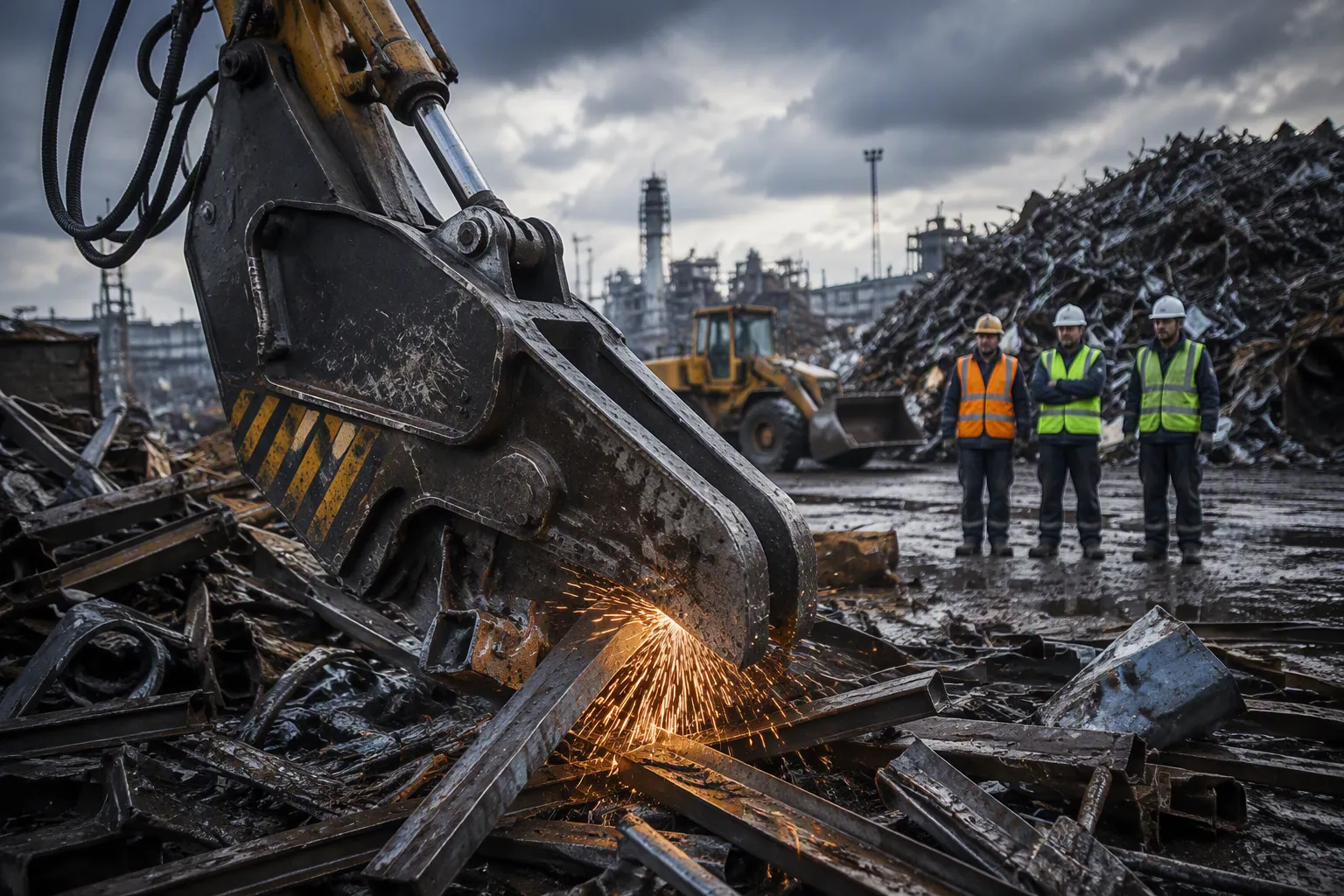
Choosing the right shear starts with a clear assessment of your daily scrap profile and facility layout. The table below provides a direct comparison of the two technologies for heavy scrap applications.
| Factor | Hydraulic Shear (Excavator Mounted) | Mechanical Shear (Stationary) |
|---|---|---|
| Initial Infrastructure | None (Uses existing carrier) | High (Concrete pad, heavy power) |
| Mobility | Excellent (Processes anywhere) | None (Fixed location) |
| Material Handling | Self-feeding via grapple/shear jaws | Requires crane or manual feeding |
| Best Application | Mixed, heavy, and structural scrap | Light, uniform, pre-sorted thin scrap |
When to Choose a Hydraulic Scrap Shear
A hydraulic scrap shear is the undisputed choice for modern scrap yards, demolition contractors, and recycling centers. It handles diverse, unpredictable materials with ease. From tearing down steel structures to processing end-of-life vehicles and heavy machinery, hydraulic shears excel.
The ability to pierce, grab, and rotate the material 360 degrees ensures that no scrap is too awkward to process. Clean, uniform, correctly sized scrap is more attractive to steel mills and typically commands a better price than mixed or poorly prepared material. JISAN Heavy offers tailored OEM solutions, ensuring your specific operational needs and carrier tonnage are perfectly matched.
When to Choose a Mechanical Shear
A mechanical shear serves a very narrow, legacy purpose today. It is only the right choice for small, indoor scrap facilities that process exclusively high volumes of uniform, light-gauge materials (like sorted aluminum siding or thin copper wire) via conveyor belts.
If your yard deals with heavy beams, pipes, or mixed demolition debris, a mechanical shear will become a bottleneck and a safety liability. The trade-off involves high maintenance scrutiny on the clutch and brake system, and a complete lack of flexibility when the scrap mix changes.
The choice between these two technologies rests on your operational priorities. Hydraulic shears deliver superior power, mobility, and safety for heavy, mixed scrap processing. Mechanical shears are largely relegated to niche, light-duty sorting lines. Your decision must balance throughput requirements, material thickness, and the total cost of infrastructure.
The right match maximizes your productivity and return on investment. JISAN Heavy provides expert guidance for your specific needs. Contact our team for a consultation, or explore our full range of Eagle Beak Hydraulic Shears to upgrade your scrap processing capabilities today.
FAQ
How Much Cutting Force Do I Need for My Scrap Operation?
Assess your heaviest material first. Hydraulic scrap shears generate hundreds of tons of force, capable of slicing through thick structural I-beams and solid shafts. Mechanical shears deliver less concentrated force and often stall on heavy structural steel. Always match the machine's opening size and force to your thickest regular input.
What Is the Real Cycle Time Difference in a Scrap Yard?
While a mechanical shear's blade might close slightly faster in thin air, actual cycle time includes material handling. An excavator-mounted hydraulic shear grabs, positions, and cuts in one fluid motion without the operator leaving the cab. This eliminates the staging and feeding delays required by stationary mechanical shears, resulting in much higher real-world daily tonnage.
How Often Must I Service Each Shear Type?
Hydraulic shears require regular greasing of pivot pins and periodic hydraulic fluid checks. Mechanical shears demand frequent, labor-intensive adjustments to clutch bands and brake friction materials, which wear out rapidly under the shock loads of heavy scrap cutting. JISAN uses Hardox 500/600 steel in wear zones to minimize structural maintenance.
Which Shear Handles Mixed Scrap More Effectively?
Hydraulic scrap shears process diverse materials without reconfiguration. The pointed "Eagle Beak" jaw design allows the operator to pierce tangled piles, grab individual beams, and rotate the shear to find the perfect cutting angle. Mechanical shears require materials to be laid flat and perfectly staged, making them highly inefficient for mixed scrap.
What Safety Features Should I Prioritize?
Operator distance and overload protection are paramount. Hydraulic shears allow the operator to stay inside the protected excavator cab. Furthermore, hydraulic relief valves automatically bypass fluid if the shear hits uncuttable material, preventing catastrophic frame damage. Mechanical shears pose severe risks of "double-stroking" (unexpected blade drops) due to clutch wear and often require operators to work dangerously close to the cutting zone.
Please Contact Us!


Recent News
1.JISAN Heavy Industry has been awarded Hardox by Swedish Steel Oklund Co., Ltd. for five consecutive years ® Handa Steel Authorization
2026-05-082.New product launch | Deeply cultivate demand, iterate and upgrade! New excavator accessories make a heavyweight debut, unlocking new operational efficiency | JISAN Heavy Industry
2026-05-083.JISAN Heavy Industry Debuts at the 2026 Las Vegas Construction Machinery Exhibition | Shining on the Global Stage with Hard Core Components
2026-05-084.Efficiency breakthrough! Empowering the industry with high-end dismantling equipment, 7-minute rapid dismantling reshapes new standards for scrapped car disposal
2026-05-08


