



How to Match a Hydraulic Breaker to Your Excavator
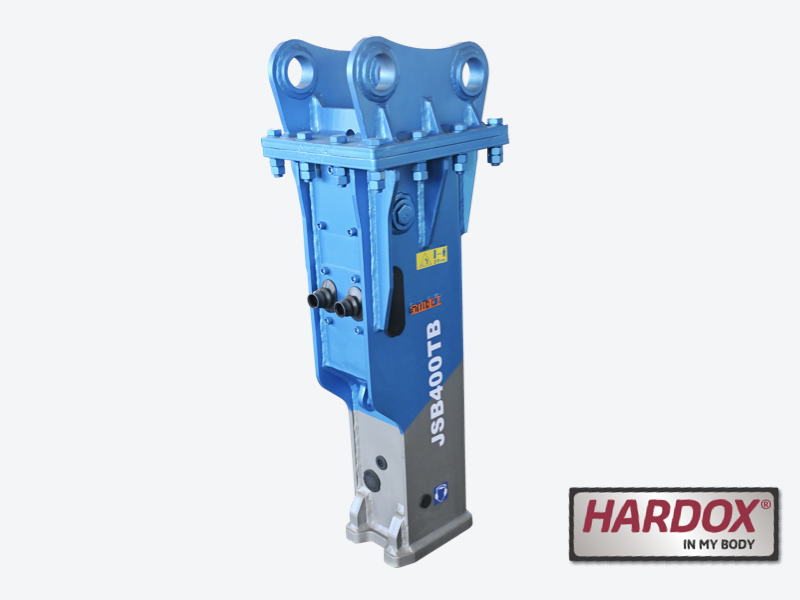
A correct match comes down to five checks: carrier weight class, hydraulic flow and pressure, mounting and hose compatibility, the right tool for the material, and parts and service support behind the attachment. Get all five right, and the carrier and the breaker work as one system.
You can run these checks on your own machine and your own job before buying or renting a hydraulic breaker. Every figure comes from the equipment manual, the dealer spec sheet, or a measurement taken at the machine. Start at the excavator, then work outward to the attachment.
Key Takeaways
Note your excavator's model, operating weight, and auxiliary hydraulic specifications before you look at any hydraulic breaker.
Size the hydraulic breaker at about 10% of the carrier's operating weight, inside the approved carrier range printed in its specification.
Measure flow at the auxiliary ports instead of quoting total pump output.
Confirm pin-on or quick-coupler dimensions, hose size, and return routing on the machine.
Match the housing type, tool point, and chisel diameter to the material, then check for local parts and service support.
Choose the Right Hydraulic Breaker: Start with Your Excavator
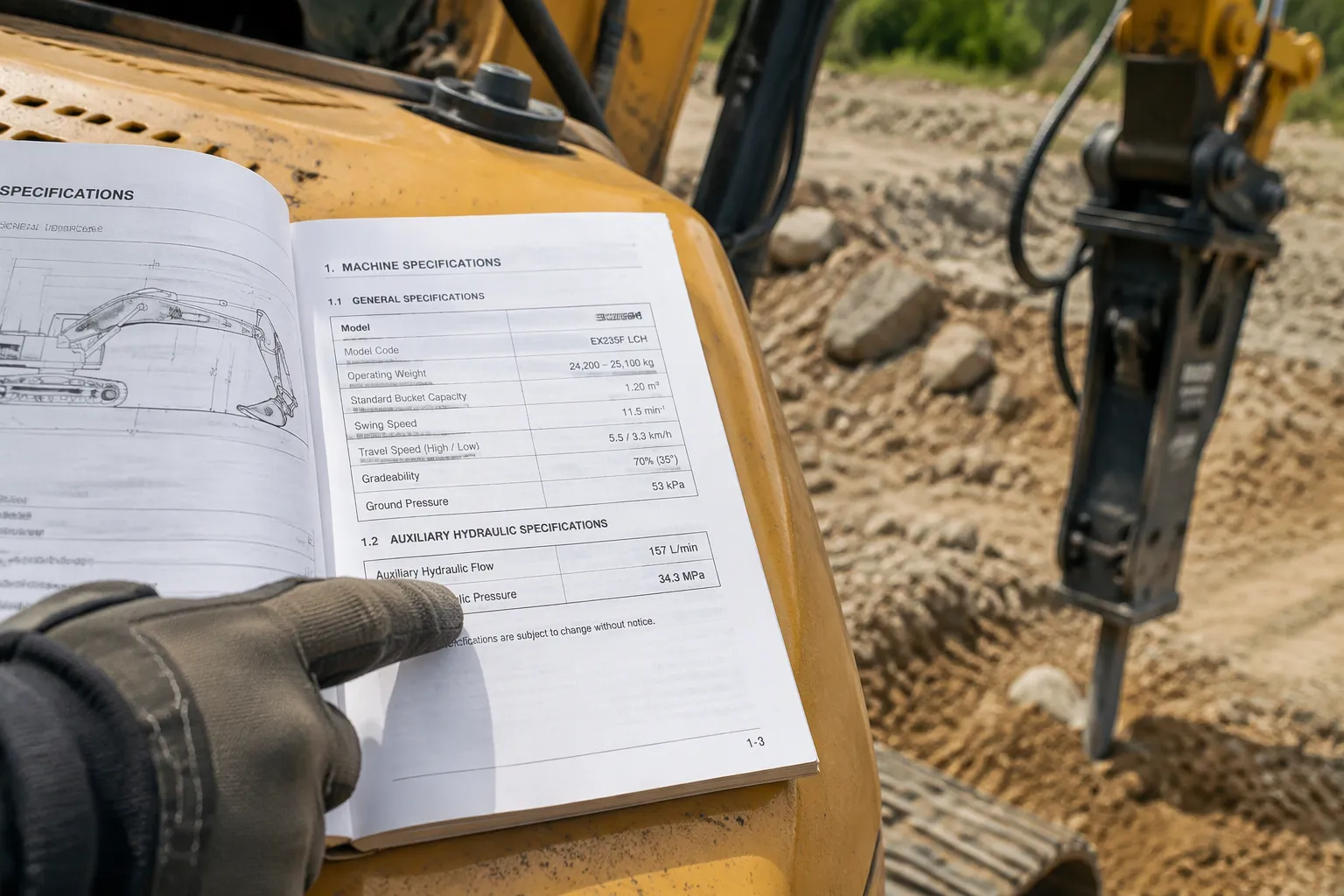
Matching starts with the carrier, not the attachment. Pull three items from the excavator manual or your dealer: the model number, the operating weight, and the auxiliary hydraulic specifications. The model identifies the exact machine variant. The operating weight sets the size class. The auxiliary specifications define the flow and pressure the machine can deliver to a breaker.
An auxiliary hydraulic circuit is a dedicated set of ports and lines that powers attachments such as breakers, thumbs, and shears. Its flow and pressure ratings are the numbers that matter here. They are not the same as main pump output; the auxiliary circuit usually runs at a lower flow than the total system. Write the values down exactly as printed.
Note Model, Operating Weight, and Auxiliary Circuit
Record the full model designation, suffix letters included. Manufacturers build several variants under one name, and each variant can carry a different operating weight and a different auxiliary circuit rating. Operating weight covers the body, the undercarriage, and a standard bucket, and it sets the tonnage class. A 20-ton machine and a 21-ton machine look identical on site and still differ on paper.
Check the circuit configuration while you are there. Some machines provide one-way flow, some two-way, and some both, and the breaker needs the right type. Note the port size and the coupler type at the same time; both affect hose selection later.
Confirm Flow and Pressure Ratings
Auxiliary flow and pressure must sit inside the range the breaker is rated for. A unit built for low flow runs badly on a high-flow circuit, and a high-pressure unit never reaches full performance on a low-pressure machine. Compare both figures, not just one. The right hydraulic breaker for a given carrier satisfies both limits at once.
Where possible, measure flow at the auxiliary ports with a flow meter rather than trusting the manual. Catalog figures describe a new machine under ideal conditions, while wear, oil temperature, and hose restrictions all cut what the pump actually delivers. Measured numbers are what a breaker has to live with.
Match Breaker Weight to Excavator Weight
Weight is the first physical limit on any attachment. A hydraulic breaker that is too heavy loads the boom, the stick, and the swing system. A hydraulic breaker that is too light leaves impact energy unused. The carrier's operating weight is the reference point for both errors.
Apply the 10% Weight Rule
The sizing rule most suppliers publish puts the hydraulic breaker at roughly 10% of the carrier's operating weight, with a working band of about 8% to 12%. That band keeps the attachment inside the structural envelope the carrier was designed for. Work toward the lower end when the machine spends its time at long reach or on light breaking, and toward the upper end only when it is on breaking work most of the day.
The ratio climbs as machines get smaller. On a 1 to 3 ton mini-excavator, breakers in the 100–170 kg (220–375 lb) class are normal, which lands well above 10% of carrier weight. The same pattern appears at the top of the range. Always compare against the approved carrier weight range printed in the breaker specification rather than a generic tonnage chart; that printed range is the final authority.
Weight classes are not standardized between manufacturers. Two hydraulic breakers sold as the same nominal size can differ by tens of kilograms, so read the shipping weight instead of the marketing class name.
Use a Published Specification Table
A specification table for a hydraulic breaker shows how carrier size, unit weight, and hydraulic demand move together. The JISAN JSB series below is one published example, with silent-type weights and the pressure, flow, frequency, and chisel figures that belong to each model. Use the carrier column to shortlist a hydraulic breaker for your excavator, then confirm every value against your own machine.
Model | Carrier (t) | Weight, silent type (kg) | Pressure (bar) | Flow (lpm) | Frequency (bpm) | Chisel (mm) |
|---|---|---|---|---|---|---|
JSB100 | 0.5–1.2 | 102 | 90–120 | 15–30 | 800–1,400 | 40 |
JSB200 | 0.8–1.5 | 126 | 90–120 | 20–40 | 700–1,200 | 45 |
JSB300 | 1.5–3.5 | 168 | 90–120 | 25–50 | 600–1,100 | 53 |
JSB400 | 4–7 | 361 | 110–140 | 40–70 | 500–900 | 68/70 |
JSB600 | 6–9 | 448 | 120–150 | 50–90 | 400–800 | 75 |
JSB800 | 7–14 | 723 | 130–160 | 60–100 | 400–800 | 85 |
JSB900 | 10–15 | 1,003 | 150–170 | 80–110 | 350–700 | 100 |
JSB1600 | 18–24 | 1,889 | 160–180 | 120–150 | 350–500 | 135 |
JSB1900 | 20–24 | 2,009 | 160–180 | 120–180 | 350–500 | 140 |
JSB3500 | 27–33 | 2,935 | 200–220 | 180–240 | 200–300 | 155 |
JSB4500 | 33–38 | 3,537 | 210–230 | 200–260 | 150–300 | 165 |
JSB5000 | 40–45 | 4,398 | 230–250 | 220–270 | 140–200 | 175 |
JSB6000 | 45–55 | 5,526 | 260–280 | 240–280 | 120–140 | 195 |
JSB6500 | 55–65 | 7,304 | 280–300 | 280–320 | 110–130 | 205 |
Silent-type weights as published. Triangle and right-angle versions of the same model are lighter. Full series data: hydraulic breaker specifications.
Every value above describes a hydraulic breaker matched to a carrier in good condition with a correctly sized return line. Use the carrier column to shortlist, then confirm flow and pressure on the machine itself.
Check Stability at Full Reach
Lift capacity falls as the arm extends. A hydraulic breaker that feels balanced close in can overload both the hydraulics and the structure at full reach. Check the excavator's lift capacity chart at the working radius you plan to use; the chart accounts for boom length, stick length, and counterweight. Compare that figure against the combined weight of the breaker, the bracket, and the hoses. Lift capacity itself is defined and measured under the ISO 10567 lift capacity standard, which also governs how the chart values are derived.
Stability matters as much as lifting strength. A heavy attachment at full reach moves the center of gravity outward, and the machine can become unstable on uneven ground or during travel. Test the combination at low speed in a safe area before production work starts.
Undersizing carries a cost too. A light hydraulic hammer needs more blows to break the same material, and the extra time wears the tool and the bushings. The right hydraulic breaker sits inside the approved range and matches the job's demand, which keeps cycle times predictable. Confirm the final figure with your dealer, then move on to the hydraulic checks.
Verify Hydraulic Flow and Pressure
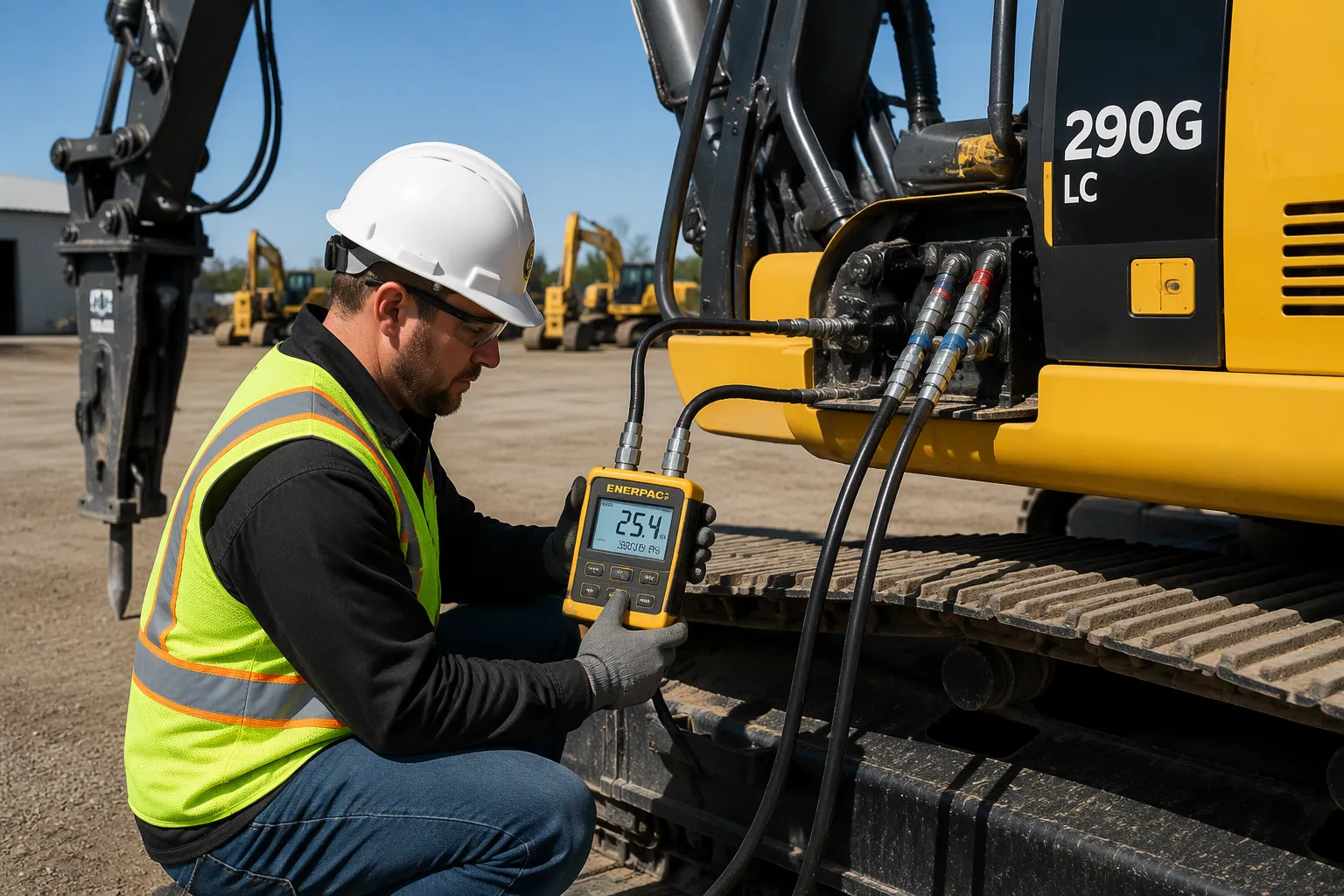
Every hydraulic breaker is engineered to run inside a defined flow and pressure window, and the excavator's auxiliary circuit has to fall inside it. This is the most common point of mismatch, and it deserves a careful check before any purchase or rental decision.
Stay Within the Breaker's Range
The specification sheet lists a flow range and a pressure range, and both carry equal weight. Below minimum flow a hydraulic breaker strikes slowly and hits weakly. Above maximum flow it overheats, wears seals faster, and can damage internal parts. Pressure follows the same logic: too little produces weak impact energy, too much overloads the piston and the housing.
Compare your excavator's figures against the hydraulic breaker's published range, not against another supplier's chart. Manufacturers rate their own equipment, and ratings are not interchangeable across brands. Record the minimum and maximum for both flow and pressure, and place the machine comfortably inside both, not at the edge. A margin near the middle of the range gives a good balance of output and service life.
Watch working pressure and back pressure together. The return line carries oil back to the tank, and a restricted return raises back pressure, which cuts effective striking force and loads the seals. Check the return filter and the hose routing during the same survey. The ISO 4413 hydraulic system safety requirements cover exactly these pressure and return-line conditions.
Measure Auxiliary Flow, Not Total Pump Flow
A frequent error is to quote total pump output as the supply available to the breaker. Total pump flow feeds the boom, the stick, the bucket, and the travel motors; only part of it reaches the auxiliary circuit. The hydraulic breaker runs on what the auxiliary line can give, and that figure is usually lower.
Measure auxiliary oil flow at the ports with a flow meter, at working temperature. That reading settles the question in a way a catalog figure cannot, because it captures wear, valve settings, and hose restrictions in one number.
Strike rate has to suit the oil volume arriving at the hydraulic breaker. Suppliers that build carrier compatibility data across major Japanese, European, and Korean makes use it to keep frequency and flow in step. JISAN, for example, publishes matching data for more than 15 carrier brands and uses it to set strike rates on real machines.
Verify the measured figure against the hydraulic breaker's range one last time before committing. A hydraulic hammer that matches on paper and mismatches on the flow meter will underperform on site, and the same check applies to any hydraulic breaker under consideration.
Renting or Buying a Hydraulic Breaker
Rental fleets and single-machine owners face the same match, but they check it at different moments. A rental hydraulic breaker has to fit the carrier on the day it arrives, so confirm the carrier weight range, the measured auxiliary flow, and the bracket before the unit leaves the yard. Buying lets you specify the housing type and chisel diameter around the work you expect over the next few years, which makes parts support the deciding factor.
Either route needs the measured flow figure rather than the catalog figure. A rented unit with the wrong flow setting wastes the hire period, and a purchased hydraulic breaker with the wrong housing type is expensive to change later.
Not sure which frame size fits your carrier? Send the model number and the measured auxiliary flow, and we will confirm the matching hydraulic breaker, hose kit, and bracket.
Get a QuoteConfirm Mounting and Pick the Right Hydraulic Breaker Tool
Mounting and tooling decide whether the match survives the first week of work. Bracket dimensions, hose routing, and the point at the end of the hydraulic breaker all have to suit the same machine.
Check Pin-On or Quick-Coupler Fit and Hoses
Confirm the bracket style before anything else: pin-on or quick-coupler. Pin-on brackets need an exact match on pin diameter, pin spacing, and bracket width. Quick-coupler systems need the correct coupler size and a locking mechanism you have verified. Measure the excavator's pin bores and compare them with the hydraulic breaker's mounting dimensions. A loose pin fit wears bushings early; a tight one may not seat at all.
Hose sizing deserves the same attention. Match hose diameter, length, and fitting type to the auxiliary ports, route the lines so they clear the boom through full articulation, and check that the return reaches the tank without sharp bends. A restricted return raises back pressure and cuts striking force. Confirm every connection before the first blow.
Match Tool Type to Material
Tool selection follows the material. A chisel point concentrates force and suits concrete demolition and general breaking. A moil point penetrates hard, dense rock and works well in trenching through compacted ground. A blunt tool spreads impact energy and fits secondary breaking of large rubble. Each design serves a specific condition, and the right point raises output while reducing wear on the hydraulic breaker.
Site conditions matter as much as material. Confined spaces, reinforced concrete, and abrasive rock each load the tool and the hydraulic hammer behind it differently. Specialty accessories such as compaction plates or dedicated trenching tools can suit a job better than a standard point, so review the full accessory range with your supplier before committing.
Choose the Housing Type for the Site
Breaker housings come in four layouts, and the choice is driven by where the machine works rather than by breaking power. Silent types enclose the housing fully and run quietest, which is what urban and residential sites usually require. Right-angle types present a flat side profile for confined spaces. Triangle types sit lower for stability on slopes and at height. Banana types use a curved body to reach breaking angles a straight housing cannot.
Housing choice also changes the weight you have to declare. The same model weighs noticeably more as a silent type than as a triangle type, so check the carrier weight limit against the figure for the housing you are actually ordering.
Match Chisel Diameter to the Carrier
Chisel diameter is a hard limit rather than a preference. Each model is built for one diameter or a narrow pair, and a chisel that is too large or too small costs efficiency and service life. Take the diameter from the specification table for the model you selected, then confirm the tool you order matches it.
Avoid Mistakes When Choosing a Hydraulic Breaker for Your Excavator
Three errors account for most mismatches, and each one surfaces later as either a repair bill or a machine that underperforms.
Oversizing, Undersizing, and Skipping Support Checks
The first error is quoting total pump flow instead of measured auxiliary flow. The second is oversizing or undersizing the hydraulic breaker against the carrier's weight class. The third is skipping a final compatibility check before money changes hands. All three are avoidable with the steps above. Confirm the numbers twice and treat the specification sheet as a contract rather than a suggestion.
Service support belongs on the selection checklist for the same reason. Parts availability and response time decide how fast a machine returns to work after a failure, and a hydraulic breaker with no local parts network can sit idle for weeks. JISAN's range runs from the JSB100 to the JSB6500 and covers carriers from 0.5 to 65 tons, backed by a 10-30-824 service commitment: a 10-minute response, a 30-minute plan, and a 24-hour resolution. Buyers should hold any brand to the same standard.
Close the loop with a local supplier or machine dealer. Bring the excavator model, the measured auxiliary flow, and the intended tool and housing type, then ask the supplier to verify mounting dimensions and the hose kit against your machine. A correct match protects the carrier, sustains output, and keeps the hydraulic hammer earning. Treat that sign-off as the last gate before purchase or rental.
Five checks, one pass. Run this list before you commit:
Breaker weight lands near 10% of operating weight, inside the approved carrier range.
Measured auxiliary flow and working pressure sit inside the published ranges, with margin at both ends.
Pin diameter, pin spacing, hose size, and return routing are confirmed on the machine.
Housing type, tool point, and chisel diameter suit the site.
Parts and service support are in place before the first blow.
Verify final compatibility with a dealer or breaker specialist before purchase or rental, and bring the machine model, the measured flow, and the intended tooling. A correct hydraulic breaker match protects the carrier and keeps productivity predictable.
Send your carrier model and measured auxiliary flow for a written matching confirmation, including bracket and hose kit.
Get a QuoteContact UsFAQ
Can one breaker serve two excavators of different sizes?
Rarely well. A unit sized for the larger carrier will overload the smaller machine's boom and lift capacity. A unit sized for the smaller carrier will underperform on the larger one. Confirm the approved carrier weight range on the breaker specification before sharing a unit across a fleet.
How do I find my excavator's auxiliary flow if the manual is missing?
Measure it directly at the auxiliary ports with a flow meter at working temperature. A dealer can also supply the factory figure for your model variant. Use the measured value for the final match, since wear and valve settings reduce delivered flow over time.
Does a heavier breaker always break faster?
No. Impact energy per blow rises with weight, but the carrier has to support that weight at full reach. An oversized unit strains the boom and the swing system. A hydraulic breaker inside the 8% to 12% band delivers steady output without overloading the machine.
Which tool point should I start with?
Start with the material. A chisel suits concrete demolition, a moil point suits hard rock and trenching, and a blunt tool suits secondary breaking of large rubble. Confirm the choice with your supplier against the actual site conditions.
How do I choose between silent, right-angle, triangle, and banana housings?
Pick by site, not by power. Silent housings suit noise-restricted urban and residential work, right-angle housings suit confined access, triangle housings give a lower center of gravity on slopes and at height, and banana housings reach working angles a straight body cannot. Check the carrier weight limit against the weight of the hydraulic breaker housing you order.
What support should I confirm before buying?
Ask about parts availability and response times. JISAN, as one example, covers carriers from 0.5 to 65 tons with its JSB100 to JSB6500 range and backs units with a 10-30-824 service commitment. Spare parts warehouses in Thailand, Japan, the United States, and Australia support customers within 48 hours.
Sources: ISO 4413:2010, hydraulic fluid power system safety requirements; ISO 10567:2007, hydraulic excavator lift capacity; JISAN published hydraulic breaker specifications.
Please Contact Us!


Recent News
1.How JISAN 4-Core Attachments Boost Demolition & Recycling Output 30%
2026-09-102.Choosing Between Hydraulic and Mechanical Scrap Shears
2026-09-043.JISAN Heavy Industry Debuts at the 2026 Las Vegas Construction Machinery Exhibition | Shining on the Global Stage with Hard Core Components
2026-05-084.Efficiency breakthrough! Empowering the industry with high-end dismantling equipment, 7-minute rapid dismantling reshapes new standards for scrapped car disposal
2026-05-08


